



For Armenians, a people still living under the shadow of what they regard as "the first genocide of the 20th century” carried out against their ancestors who lived under the Ottoman Empire, the listing ensures protection of a small but treasured piece of their heritage. But a visit to the region today shows that, outside the walls of Ani, what remains of Armenian culture in Turkey is in danger of disappearing entirely.
Armenia's Broken Heritage
In July 2016, the ancient Armenian city of Ani, now in eastern Turkey, was inscribed as a UNESCO World Heritage site.

17
Kizil Kilise church, in the village of Yagkesen. The village, a few kilometers outside Ani, was Armenian until 1920, when its Armenian inhabitants were forced to flee to Soviet Armenia.

18
The interior of Kizil Kilise church. The ancient structure is currently used to house chickens. The cross above the entrance to the church has been chipped away.

19
A living gargoyle, in the form of a Caucasian sheepdog, chained to the church.
20
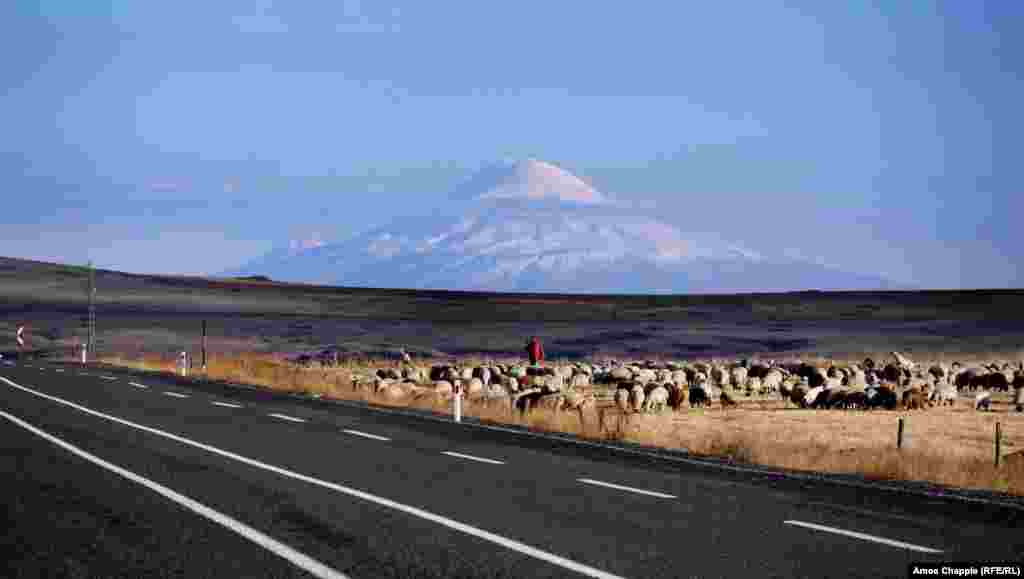
On the plains around Ani, Mt. Ararat, the fabled landing place of Noah's Ark, looms above the landscape. Ararat features on the coat of arms of Armenia but today lies within Turkish borders.