



But while the Soviets held their own and in some cases bettered their capitalist rivals in some fields -- such as space exploration and weaponry -- they were behind from the start when it came to the automobile. Often, the U.S.S.R. had to copy its capitalist rivals just to keep pace.
The Copycat Cars Of The U.S.S.R.
Industry loomed large in the race for influence between the West and the Soviet Union, symbolizing power and the ability to create, innovate, and carry the world into the future.

10
This slab of cool, known as the 1955 Packard Caribbean, had a short-lived production run in the United States. But the design was granted an unexpected second life when In 1959 the Soviets came out with their most prestigious comrade carrier.

12
It wasn't just American cars that the Soviet designers looked to for inspiration. Italy's bubbly Fiat 600d was a hit throughout Europe, with more than a million units sold within five years of its 1955 release.

13
In 1961, the Soviets came out with the ZAZ 965, a nearly identical copy of the Fiat, right down to the forward-opening "suicide doors." By the 1960s Soviet designs were becoming more proletarian as an increasing number of ordinary Soviet citizens were able to get their own passenger cars, albeit after a lengthy wait.
14
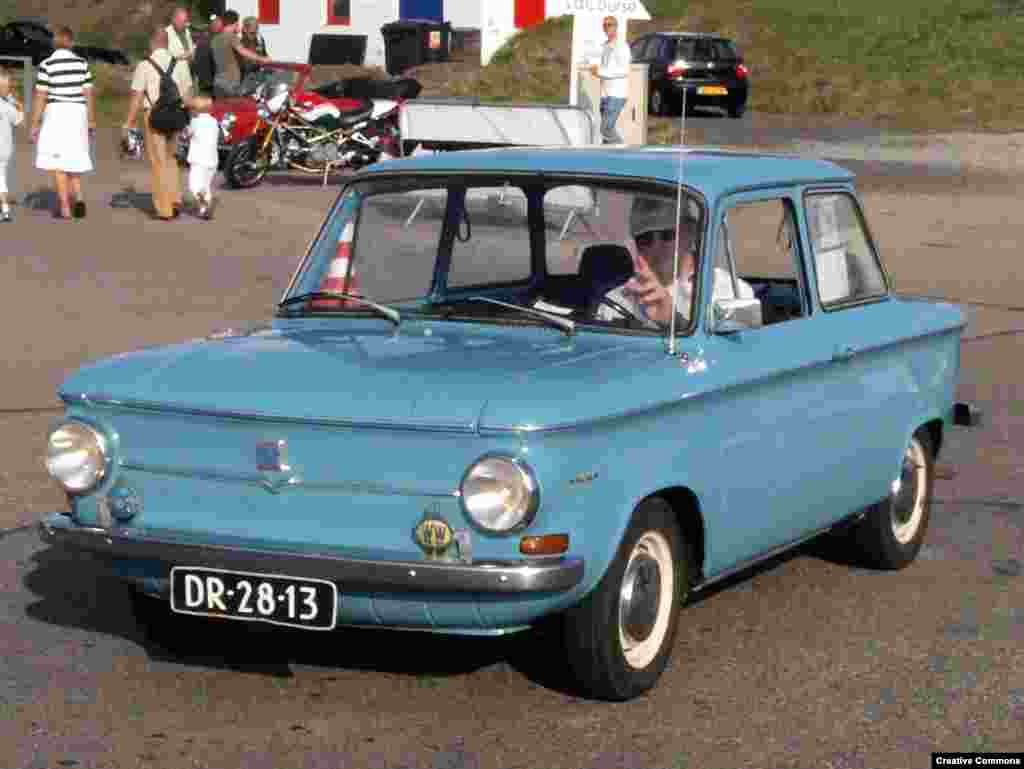
"Drive a Prinz and be a King" ran the marketing for West Germany's NSU Prinz 4 when it was released in 1961. The car was not for Kings in a hurry though, taking more than half a minute to hit 97 kilometers per hour.