



For Armenians, a people still living under the shadow of what they regard as "the first genocide of the 20th century” carried out against their ancestors who lived under the Ottoman Empire, the listing ensures protection of a small but treasured piece of their heritage. But a visit to the region today shows that, outside the walls of Ani, what remains of Armenian culture in Turkey is in danger of disappearing entirely.
Armenia's Broken Heritage
In July 2016, the ancient Armenian city of Ani, now in eastern Turkey, was inscribed as a UNESCO World Heritage site.
5
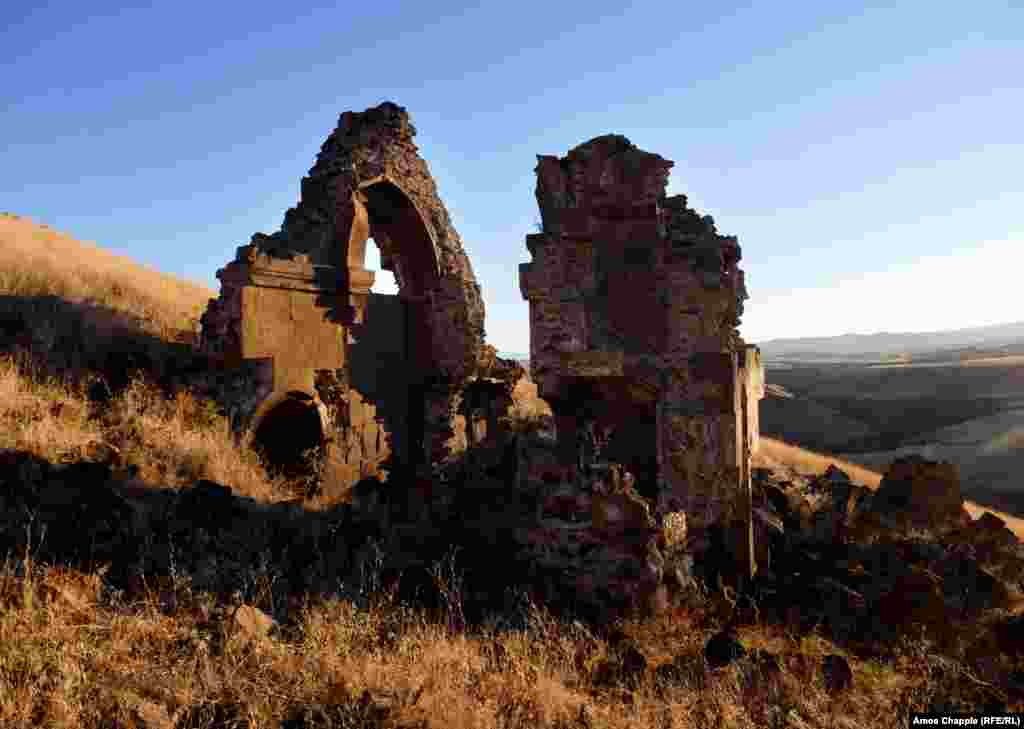
Remnants of the Mausoleum of Child Princes in Ani. A little over a century ago, as the Ottoman Empire began to crumble, Armenians -- a Christian minority in a Muslim empire -- were viewed as a fifth column, sympathetic to their fellow Christians in the Russian empire.
6
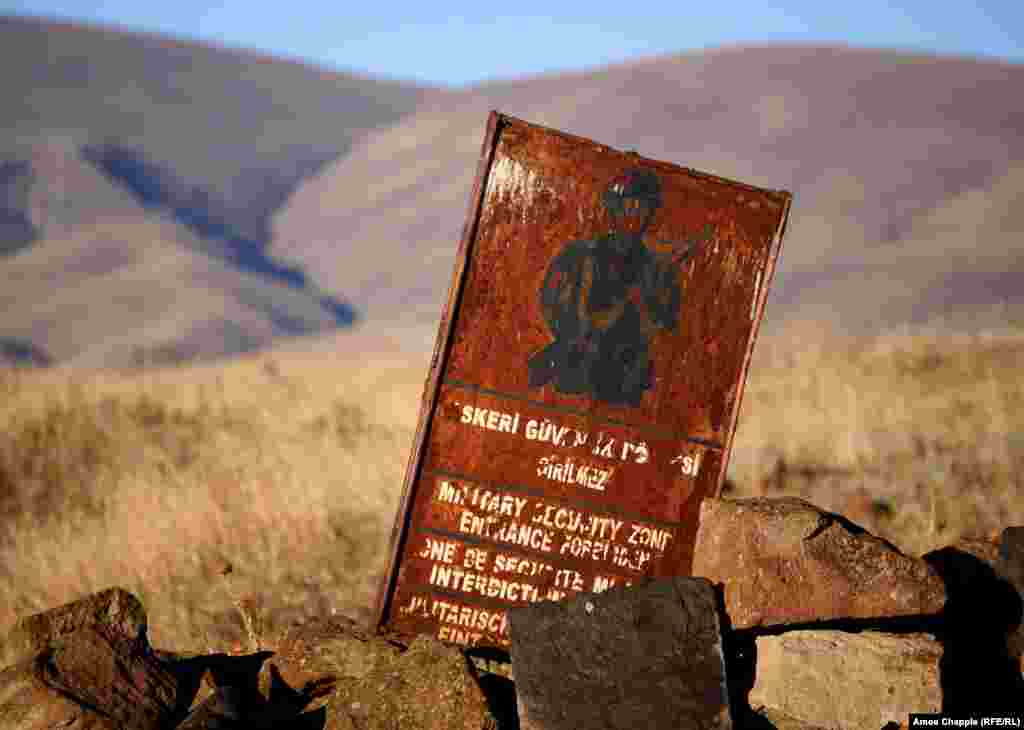
An outdated sign declaring a portion of Ani a military zone. The Turkish side of the border is demilitarized, but some areas of Ani remain off limits.
7
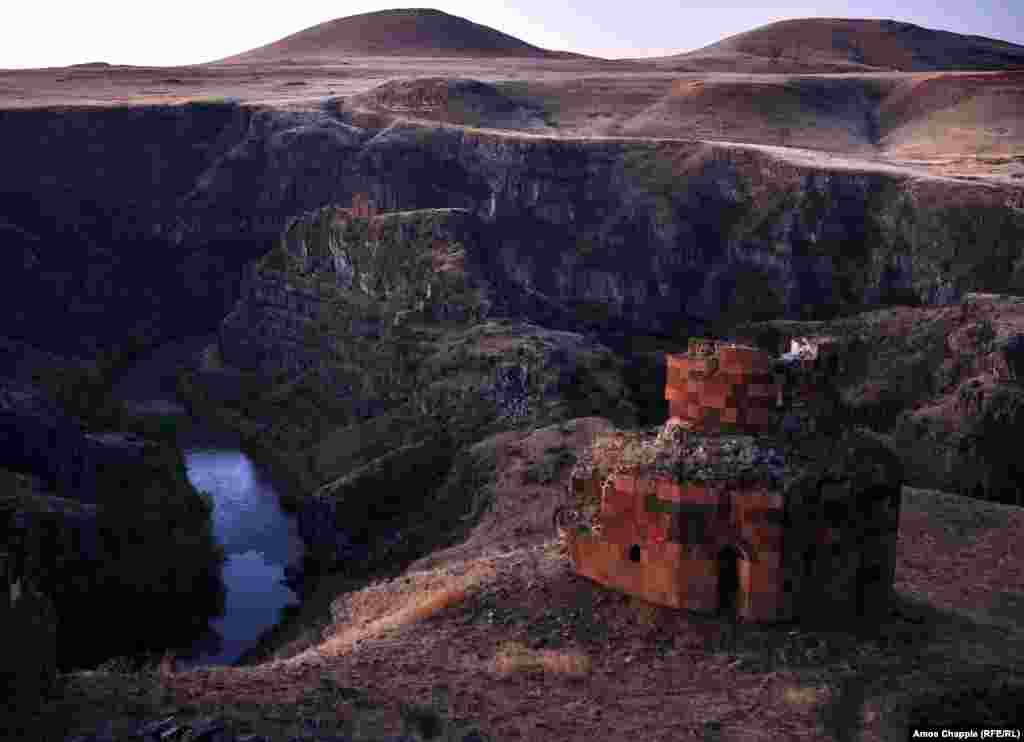
The Canyon that separates Turkey and Armenia. In 1915, after Ottoman authorities issued an order calling for the "deportation" of the entire Armenian population, a frenzy of killing began across the region, which today lies in eastern Turkey.

8
Inside Ani after dark, the lights of an Armenian border post (right) glint behind the Church of St. Gregory of Tigran Honents. The Turkish-Armenian border has been closed since 1993, when Ankara also cut off diplomatic ties with Yerevan in connection with Armenia's dispute with Azerbaijan over the territory of Nagorno-Karabakh.